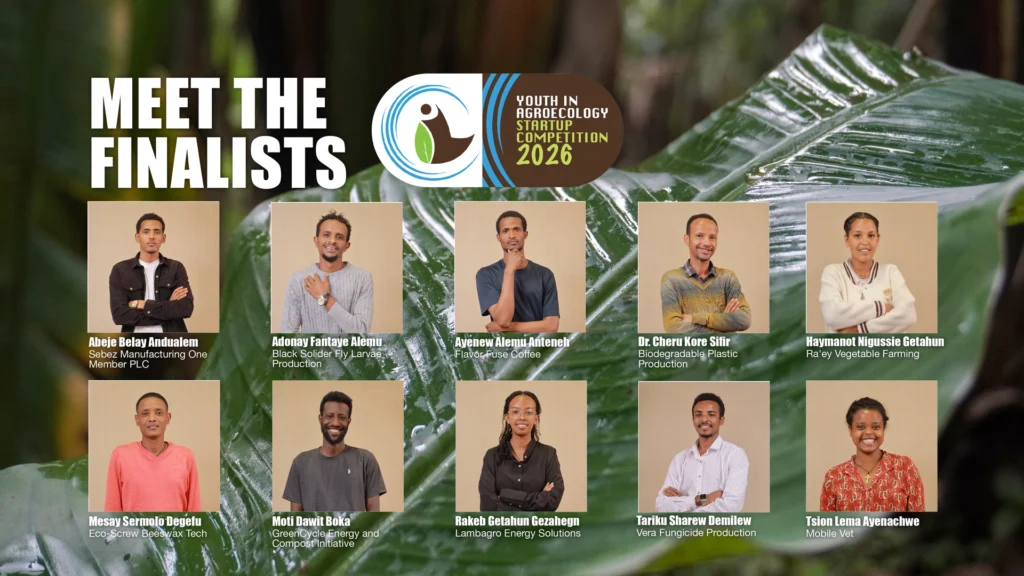
The Top 10 finalists of the Youth in Agroecology Startup Competition 2026 were announced on 11 August, following a competitive evaluation of applications against a detailed assessment framework covering relevance, sustainability, impact, efficiency and scaling potential, alongside due diligence and verification.
On 13–14 August, the finalists participated in a two-day training and mentorship programme covering business analysis, financial assessment, business planning, pitch-deck preparation, business model development and effective startup storytelling. They then presented their five-minute pitches before a panel of judges on 21 August, followed by a 15-minute question-and-answer session.
Here, we introduce the Top 10 finalists, listed alphabetically, and highlight the innovative solutions they are developing to contribute to healthier and more sustainable food systems in Ethiopia. (For more details about all startups from 2026 and 2025 competition, please visit the new Finalists Database.)
Abeje Belay Andualem — Sebez Manufacturing One Member PLC
 This agroecological startup combats child malnutrition by producing locally made, germination-based complementary food to reduce reliance on imported nutrition products. Using locally sourced malt barley, lentils and faba beans, it applies a controlled germination and dehydration process to improve nutrient absorption. With laboratory verification and growing retail and business-to-business demand, the startup aims to scale production and make nutritious, affordable food more widely available.
Adonay Fantaye Alemu — Black Soldier Fly Larvae Production
 This biotechnology startup transforms municipal organic waste into valuable agricultural resources using Black Soldier Fly farming. In just two to three weeks, the process converts organic waste into protein-rich animal feed and natural organic fertilizer. The circular model also supports poultry farmers and indigenous chicken production. By partnering with waste cooperatives, the startup reduces input costs while addressing waste management and sustainable feed and fertilizer needs.
Ayenew Alemu Anteneh — Flavor Fuse Coffee
 This innovative startup introduces a single-serve coffee product designed like a tea bag, combining Ethiopian coffee with natural flavours. It provides a quick, high-quality alternative to conventional coffee preparation, without expensive brewing equipment. By bringing convenience, variety and affordability together, the startup aims to meet the needs of modern consumers, workplaces and hospitality businesses while creating new opportunities for Ethiopian coffee.
Dr. Cheru Kore Sifir — Biodegradable Plastic Production
 This eco-friendly startup produces biodegradable plastic bags from locally sourced cassava, enset and maize starch, offering an alternative to conventional single-use plastics. Its Thermoplastic Starch technology produces durable, water-resistant bags that can naturally decompose within 90 to 180 days. The venture aims to reduce plastic pollution while creating value from local agricultural resources, initially focusing on biodegradable bags for plant nurseries.
Haymanot Nigussie Getahun — Ra’ey Vegetable Farming
 This social enterprise cultivates diverse vegetables and grains on an irrigated agroecological farm throughout the year. The farm uses agricultural waste to produce organic compost, reducing reliance on chemical inputs, while supplying fresh produce to local communities and markets. It also creates employment, particularly for women, and plans to expand its land and integrate poultry, herbal crops and beekeeping into a circular farming system.
Mesay Sermolo Degefu — Eco-Screw Beeswax Tech
 This startup addresses beeswax waste by replacing inefficient traditional boiling methods with a locally fabricated mechanical screw press. The technology increases wax recovery, reduces labour and helps protect unprocessed combs from damage. The startup also promotes women’s participation in the beeswax value chain and follows a circular model, generating additional value from processing waste. Its ambition is to make efficient beeswax processing more accessible to beekeepers and farmers.
Moti Dawit Boka — GreenCycle Energy and Compost Initiative
 This waste-to-energy initiative transforms livestock manure and biodegradable organic waste into two valuable products: organic compost and biogas fuel. Through a circular system, the startup processes collected waste to produce compost for farmers while generating biogas for household use. With initial compost production already underway, the venture aims to expand its processing capacity, improve its products and develop vermicompost production.
Rakeb Getahun Gezahegn — Lambagro Energy Solutions
 This agritech startup converts urban organic waste into affordable, low-carbon organic fertilizer for home gardeners and farmers. The fertilizer is packaged in convenient biodegradable bags and distributed through digital channels, while partnerships with farms and municipal offices help secure organic waste supplies. Currently producing 500 kilograms per batch, the startup aims to double its capacity while expanding waste collection and reaching more smallholder farmers.
Tariku Sharew Demilew — Vera Fungicide Production
 This agroecological venture produces an affordable botanical fungicide made from locally available ingredients such as neem leaves to help reduce crop losses caused by fungal diseases. The plant-based solution is designed to protect crops without harmful chemical residues, supporting healthier soils, people and pollinators. With a dual business-to-business and consumer model and an official utility patent, the startup aims to expand production and make its solution more widely available.
Tsion Lema Ayenachwe — Mobile Vet
 This digital agritech platform improves livestock management through smart RFID-GPS ear tags and satellite tracking. It creates digital profiles for individual animals, providing traceability, early warnings and data that can support access to financial services. By connecting livestock information with veterinary, banking and insurance services, the startup aims to build trusted digital infrastructure for Ethiopia’s large livestock sector.
Celebrating the Finalists
The Top 10 finalists have demonstrated creativity, commitment and entrepreneurial potential in developing solutions that connect agriculture, environmental sustainability, nutrition and economic opportunity.
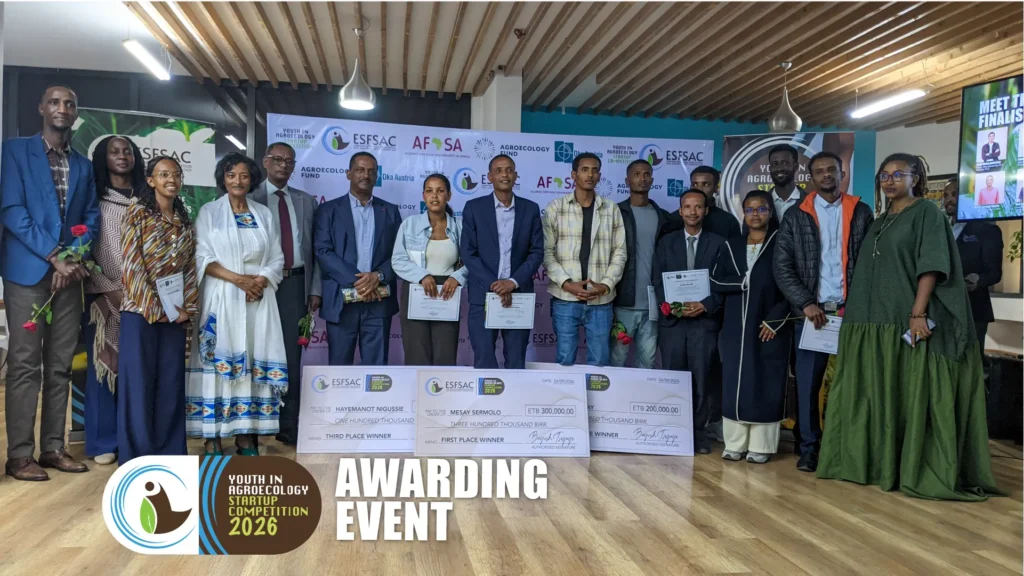
They will be recognized and celebrated at the final Awarding Event on 4 September, where the Top 3 winners of the Youth in Agroecology Startup Competition 2026 will also be announced and awarded for their outstanding achievements.
Congratulations to all 10 finalists, and thank you for commitment and energy towards a healthier and more sustainable food system in Ethiopia.