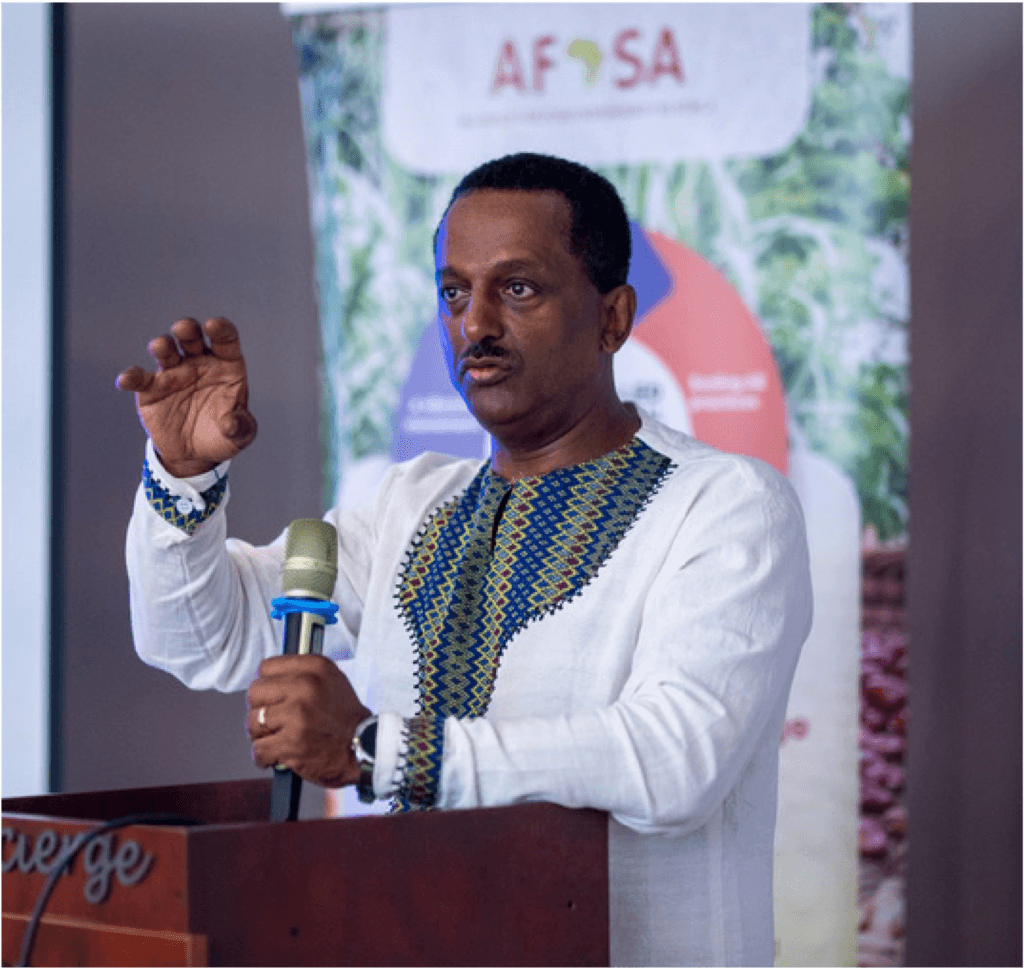
The following is the full interview with Dr. Million Belay, General Coordinator or Alliance for Food Sovereignty in Africa (AFSA). We extend our deepest appreciation to Dr. Million Belay for his lifelong dedication to environmental stewardship, biocultural diversity, and food sovereignty in Africa. His leadership from mobilizing youth to shaping continental movements stands as an inspiration to all of us working toward resilient and sustainable food systems.
At ESFSAC, we honor and acknowledge pioneers like Dr. Million whose vision and tireless activism have paved the way for stronger community engagement, youth empowerment, and the protection of Africa’s rich ecological heritage. We celebrate his contributions and remain committed to carrying forward this legacy by nurturing the next generation of leaders in agroecology, indigenous knowledge, and sustainable food systems. We thank Dr. Million for his time, and we invite you to the full interview.
ESFSAC: Who is Million? Can you explain briefly?
I was born and raised in Merkato, a place I call a miniature of Ethiopia hosting the largest open market. It is unusual for someone from Merkato not to end up as a merchant or businessman, but my journey took a different path.
After completing school, I began my career teaching biology and chemistry at Gindeberet Secondary School in central Ethiopia. While there, I collected plants for the Ethiopian Herbarium and wrote short stories to share at school. Later, I moved to Wolliso and started an environmental club, which became one of the strongest in Ethiopia through the dedication of teachers and students. During this time, I learned of a vacancy at the Ethiopian Heritage Trust, an NGO initiated by Michael Sargent of the British Council together with prominent Ethiopians, inspired by the English Trust. Its main goal was the preservation of Ethiopia’s historic buildings. The Trust also took an interest in Entoto Mountain, a historic site where Emperor Menelik resided and built churches. I joined the Trust and spent three years mobilizing citizens, especially youth, to plant indigenous trees on the mountain and to protect historic buildings.
ESFSAC: How did you get involved in environmental activism? What were your sources of inspiration? How was the journey?
My journey is long, and my inspirations came at different stages, each building on the other. One pivotal moment was attending an Ethiopian Biological Society meeting in Addis Ababa on environmental education. By then, a teacher from Bale spoke about the loss of wildlife due to political instability and how he organized his students to protect the wildlife. As a young man, I was deeply moved and started the Walga Environmental Club at my own school. The club is still active today, and its leaders remain in touch with me.
After sometime, I shifted my focus from only celebrations to studying the environment more systematically. I divided the club members into four groups to study wildlife, wetlands, crop farms, and animal diversity. We later organized an exhibition, inviting leaders such as the late Dr. Tewolde Gebre-Egziabher, a Nobel Prize laureate, renowned environmentalist and African biosafety negotiator; and Sue Edwards, Founder and Director of the ISD.
Impressed by my mobilization skills, the Ethiopian Heritage Trust invited me to join them in managing the Entoto Mountain. I founded the Ethiopian Heritage Youth Club, and every year we planted indigenous trees at Entoto. My reputation grew as someone able to mobilize and encourage participation in environmental action.
ESFSAC: Where did your journey take you after you founded the Ethiopian Heritage Youth Club?
I then joined ISD, where I worked with farmers in Tigray, learning from their deep knowledge of sustainability and the challenges they faced. I later pursued a Master’s in Tourism and Conservation. After graduating, I was invited by Liz Hosken to participate in the 2002 World Summit on Sustainable Development (Rio+10) in South Africa. Another turning point was meeting Wangari Maathai, the Kenyan Nobel Peace Prize laureate, who inspired me further.
A book on the Spiritual and Cultural Values of Biodiversity pushed me further to develop the idea of cultural biodiversity in Ethiopia. With Sue Edwards, I proposed training teachers on participatory mapping. With support from the Gaia Foundation, we secured funding. This initiative evolved into an annual cultural celebration that spread across Africa. Some credit it to the starting of the Ethiopian nations and nationalities day.
Later, I founded MELCA-Ethiopia (Movement for Ecological Learning and Community Action). Through MELCA, I developed the Segni (Seeds in Oromiffa language) initiative, which engaged youth and elders in environmental learning. Segni became MELCA’s flagship program, with a guide developed for replication.
ESFSAC: Did your environmental activism remain within Ethiopia, or did it extend to other African countries?
My activism extended far beyond Ethiopia. It began jointly, with the other founders, the conceptualization and creation of the African Biodiversity Network (ABN). This Network became a platform for extending the biocultural celebrations to eight African countries.
While working with MELCA, I participated in developing a proposal on environmental litigation in Sheka. Today, Sheka is one of five biosphere reserves in Ethiopia, two of which were registered through the initiative and support of MELCAEthiopia. These achievements further strengthened to keep up my activism as an environmentalist.
With MELCA, I also worked closely with colleagues such as Solomon Kebede (MELCA’s current Director) and Mellese Damtie (a Lawyer and Lecturer at Addis Ababa University) on environmental governance initiatives. MELCA proposed a cross-sectoral environmental agenda and drafted a law for the Ethiopian Parliament, which led to a full environmental impact assessment being commissioned.
My mobilization also expanded into a continental movement, which ultimately led to the establishment of the Alliance for Food Sovereignty in Africa (AFSA). Four networks started AFSA and I was fortunate enough to be one of the founders. I am serving as AFSA’s General Coordinator since 2013.
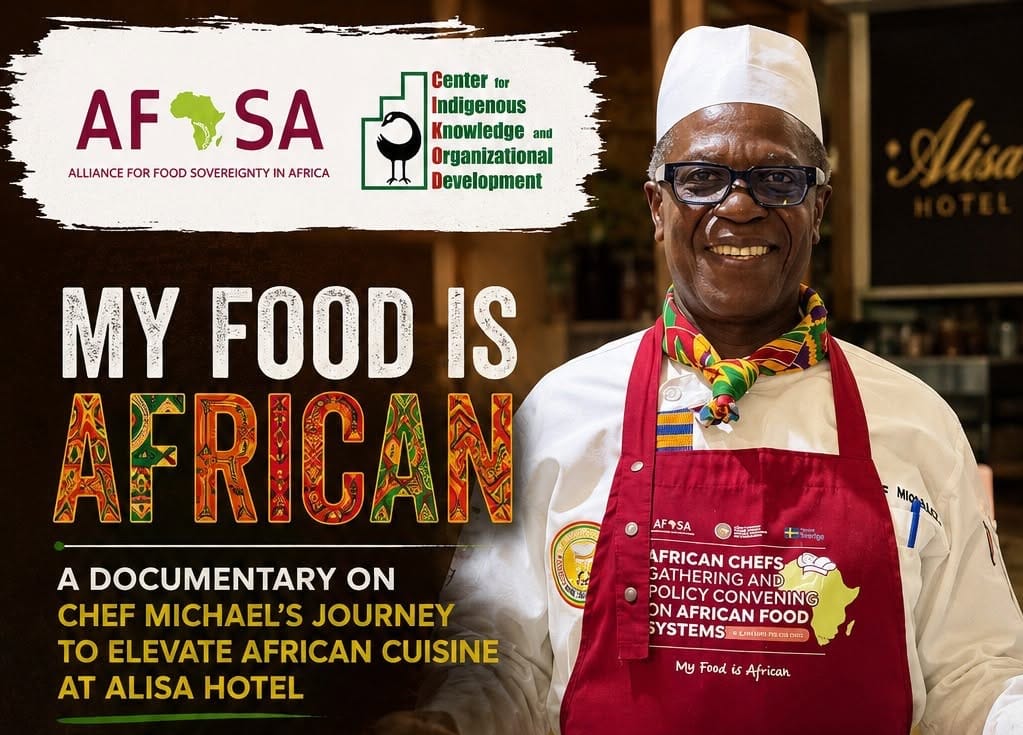
Through AFSA, I came to realize the central importance of Africa’s food diversity for community resilience. We promoted seed and food fairs as a way to celebrate and share knowledge about diverse seeds. This inspired the My Food is African campaign, which continues to raise awareness about food sovereignty and agrobiodiversity.
We also saw the importance of engaging Africa’s youth, the continent’s most productive generation, in agroecology and food sovereignty. AFSA now promotes agroecological entrepreneurship and platforms for youth to share knowledge and innovations.
Today, AFSA’s work combines advocacy, research, and collaboration, including cross-border trade initiatives, in partnership with the Swedish Embassy.