
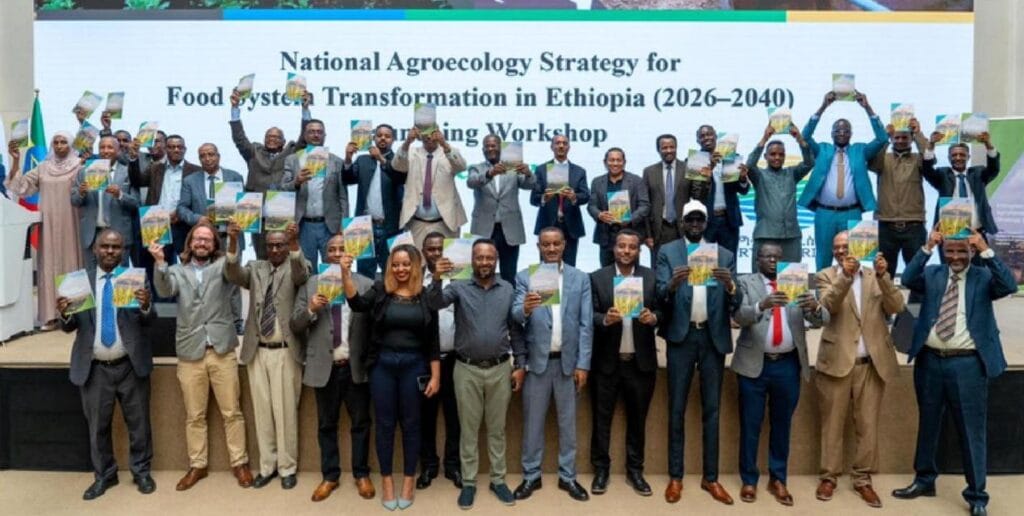
On March 14 2026, the Government of Ethiopia officially launched its National Agroecology Strategy for Food System Transformation (2026–2040), marking a significant step toward building sustainable, resilient, and inclusive food systems. The launch event brought together high-level government officials, including senior representatives from the Ministry of Agriculture, alongside development partners, research institutions, and other key stakeholders.
Agriculture remains central to Ethiopia’s economy, yet the sector faces increasing pressures from land degradation, climate variability, and declining soil fertility. The new strategy positions agroecology as a key pathway for transformation—promoting integrated approaches that link crops, livestock, trees, soils, and water systems to restore ecosystems and enhance productivity sustainably.
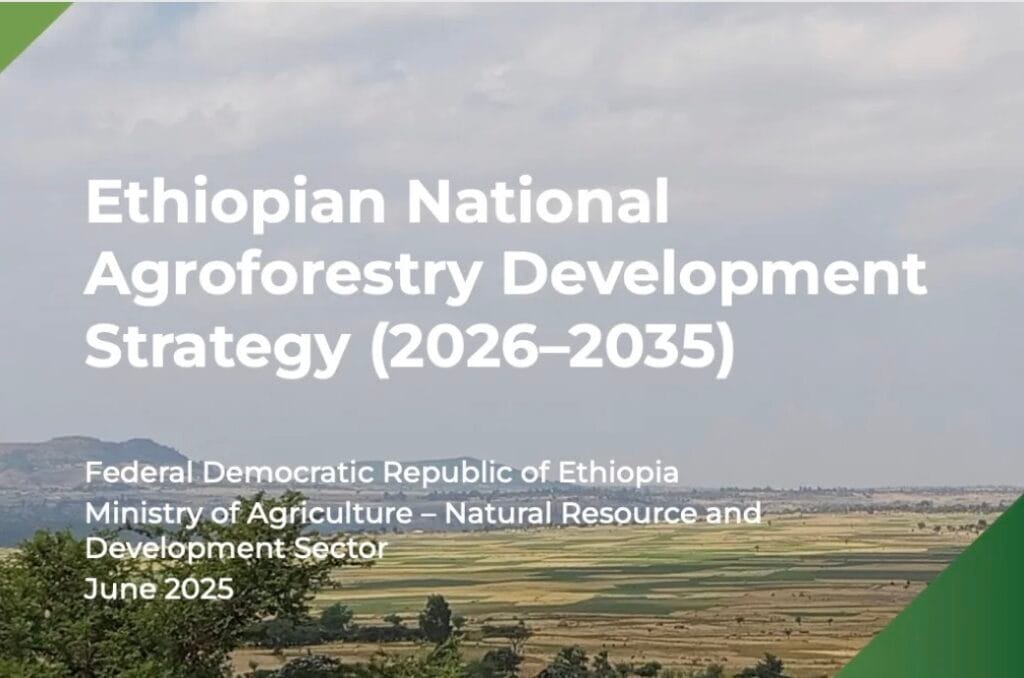
Spanning 15 years, the strategy provides a framework to scale agroecological practices across the country. It places strong emphasis on coordinated investment, knowledge sharing, and institutional collaboration. Alongside this effort, the government also introduced a national agroforestry strategy, reinforcing the role of tree-based solutions in improving soil health, water management, and climate resilience.
The launch event underscored strong political commitment, with senior officials highlighting the importance of agroecology in achieving long-term food security, environmental sustainability, and economic resilience. The strategy’s success will depend on continued collaboration among government, development partners, civil society, and the private sector.
The launch signals Ethiopia’s growing leadership in advancing agroecology as a practical approach to food system transformation, with potential lessons for the wider region.
Download the full document: National Agroecology Strategy for Food System Transformation (2026–2040)
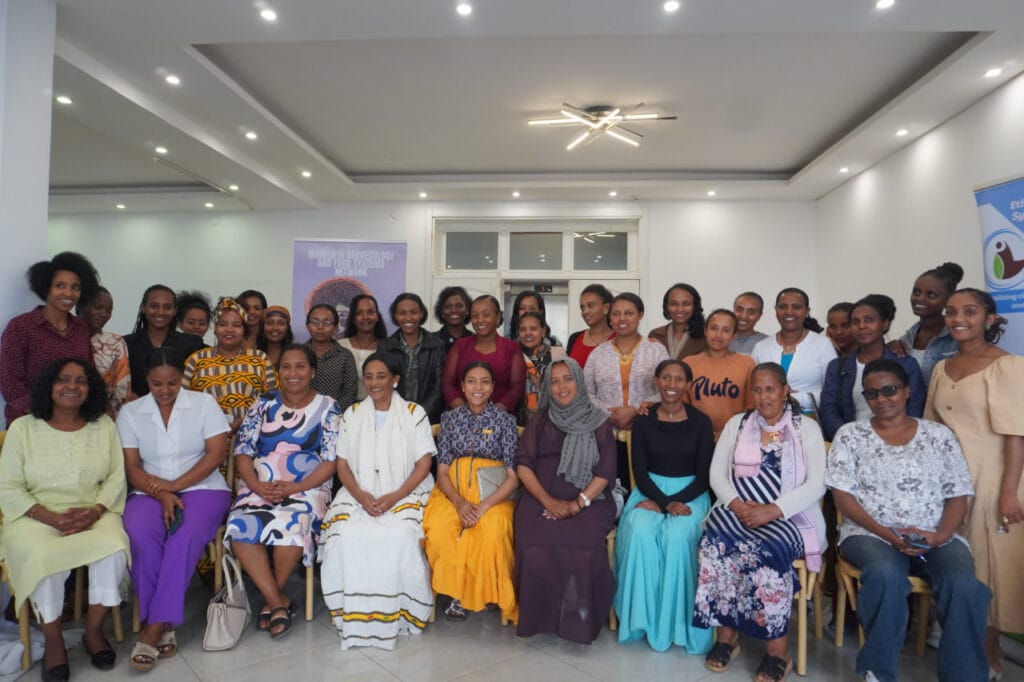
The official launch of the National Agroecology Strategy is happening at the right time. More over, it is in line with the objectives of the ESFAC. I look forward to its full implementation.
Amazingly only one lady has seen in the group. So this shows that still there are so many assignment for us to work on this issue.