
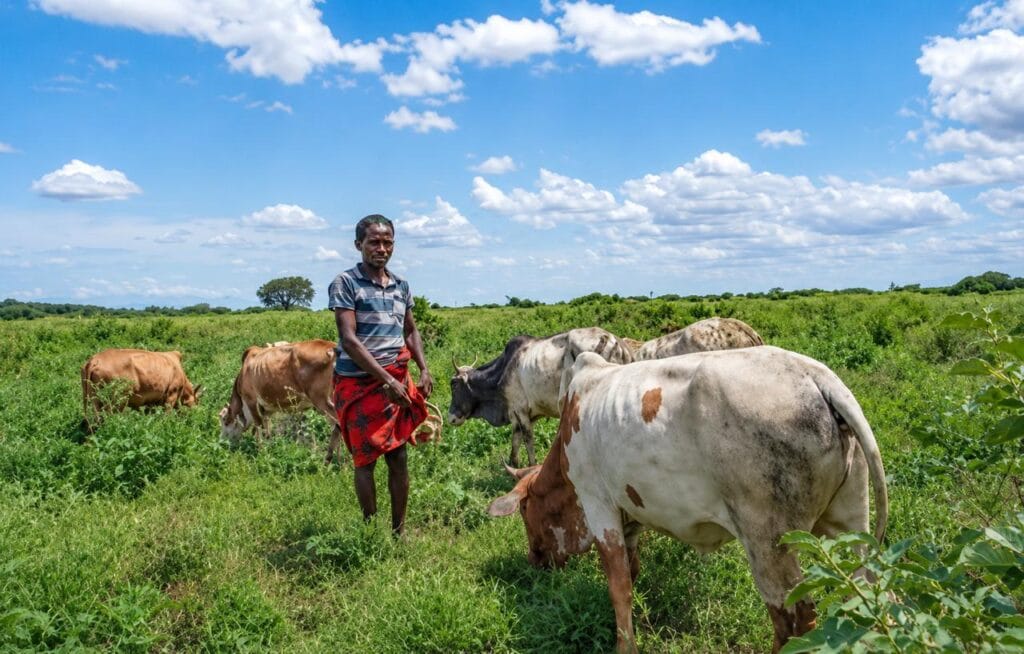
Along the lower Omo River in southern Ethiopia, the Dasenech community lives in a harsh, unpredictable environment (arid and semi-arid climate) characterized by intense heat, erratic rainfall, frequent droughts and floods. Despite these challenges, the community has sustained its livelihood for generations through a resilient pastoral system built on deep ecological knowledge and strong social institutions.
Traditionally, the Dasenech rely on rearing livestock cattle, goats, sheep, and camels – combined with seasonal fishing and small-scale farming of drought-tolerant crops such as sorghum and maize. Mobility is central to their pastoral way of life, allowing herders to move livestock seasonally in search of pasture and water. This movement is carefully guided by community elders who have deep knowledge about rainfall patterns, vegetation cycles, and the dynamics of the rangeland ecosystem. Herd splitting is another strategy adopted to reduce pressure on available feed and water resources.
In recent years, the community has strengthened its resilience through an agroecological initiative focused on fodder production. With active participation of women and youth, households have begun cultivating improved fodder species such as Desho grass, Sudan grass, and Elephant grass, often intercropped with legumes like Lablab that enrich the soil and increase the nutritional value of livestock feed.
Using seasonal flooding from the Omo River and simple irrigation methods such as hand pumps, community members grow and harvest fodder even in dry conditions. The grasses are carefully harvested, sun-dried, and stored to ensure feed availability during the dry season when natural grazing becomes scarce.
The impact has been significant. Livestock health and productivity have improved, milk production has increased, and some households now generate additional income by selling surplus fodder to neighbours in need during periods of feed shortage.
As one fodder production project participant household shared his experience: “We used to watch our animals weaken and even die when the dry season becomes so harsh through time. Now, we grow and store enough feed to support our animals, and sometimes we even sell the extra feed to neighbours. This practice has made our community resilient and thriving.”
The Lesson: experience of the Dasenech community demonstrates how pastoral knowledge, community cooperation, and agroecological innovation can strengthen resilience in fragile ecosystems. It is a powerful example of how indigenous practices and locally adapted solutions can contribute to sustainable food systems and livelihoods in Ethiopia.
Thank you for sharing such promising development like the one in the “Dasenech” community. The storage of the feed can substantially be improved if you also introduce silage making with “Effective Microorganisms” solution . If interested contact.