Morning arrives gently beneath Jimma’s green canopy. Sunlight passes through the branches of tall indigenous trees and falls softly on coffee plants growing below. Fruit trees, food crops and livestock form part of the same landscape. Birds move through the branches, fallen leaves cover the ground, and farmers begin their daily work. Here, trees are not obstacles to farming they are essential partners in it.
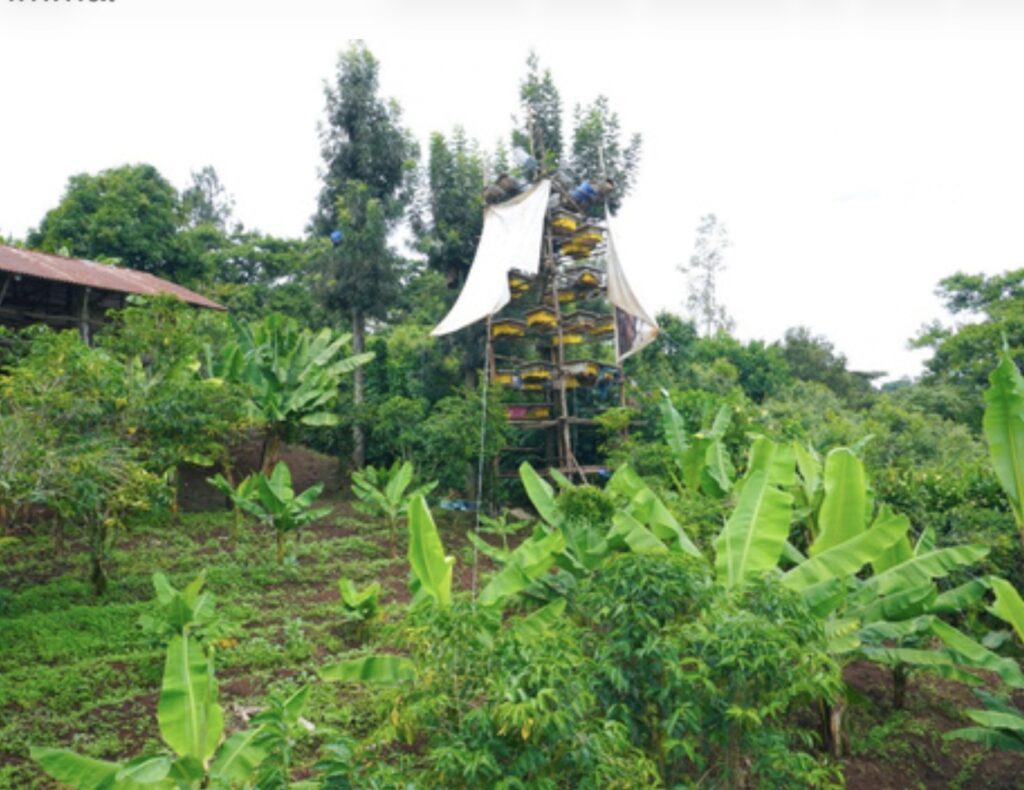
Farmers in Jimma are responding to declining soil fertility, unpredictable rainfall, rising temperatures and increasing pressure on farmland. Their answer can be seen in the way they bring trees, crops and livestock together. Tall trees provide shade and protect coffee shrubs from excessive heat. The fallen leaves decompose and enrich the soil, while their roots help reduce erosion and retain soil moisture. Some trees also provide fruit, animal feed, fuelwood, timber and other products that families can use or sell.
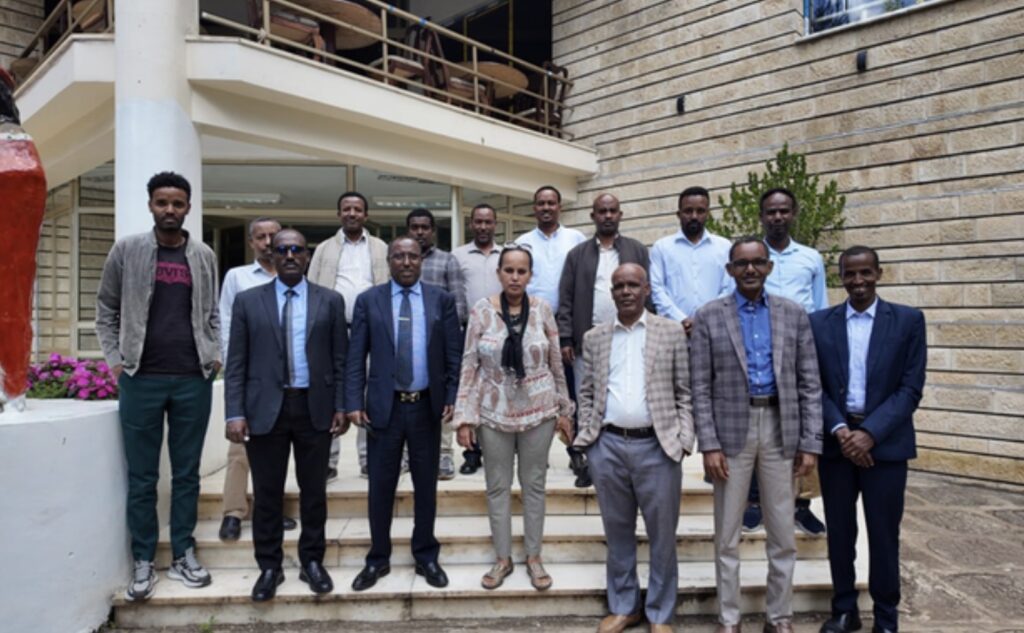
During its best-practice documentation visit, ESFSAC team walked through these farms and listened to the people who have shaped and sustained them. The team observed that successful agroforestry is not simply about having many trees on a farm. It is about creating the right relationships between them and harvest products throughout the year. Farmers carefully select useful species, manage spacing and prune branches so that annual crops underneath receive enough shade, sunlight and airflow.
“The tall trees provide more than shade to our coffee. They feed the soil, enhance soil moisture content, support our family and help protect the farm soil for the next generation.” responded Abba Jabel – who is an agroforestry farmer from Jimma.
A further strength of these farms is the way farmers have adapted agroforestry to their own needs and local conditions. Rather than following a fixed model, they draw on generations of indigenous knowledge to decide which trees to retain, which crops to grow beneath them and how to manage the available space. This practical knowledge allows the farm to produce food and income while maintaining the ecological functions that sustain it. In this way, agroforestry becomes more than a farming technique, it is a way of managing the land that connects household wellbeing with the health of the wider ecosystem.
The most powerful lesson from Jimma is maintaining layers of diversity. Instead of relying on one crop as source of food or income, families obtain different benefits from coffee, fruits, food crops, livestock and multipurpose trees. When one product performs poorly, another may help the household manage the loss. At the same time, the layered farms provide habitats for birds, insects and other living organisms that keep the ecosystem healthy.
ESFSAC recognized this carefully managed, multilayered farming system as a best agroecological practice with valuable lessons for other areas. Its strength lies not in one particular tree or food crop as such, but in the way farmers purposely design and manage the entire farm as an interconnected living system. Communities seeking to adapt the practice should, therefore, select species and combinations suited to their local context: soil, climate, available land size and livelihood priorities rather than copying Jimma’s model exactly.
As the afternoon light fades beneath the canopy, one message remains clear: in Jimma, farmers are not choosing between forests and food production. They are showing how the two can grow together, one supporting the other. By documenting and sharing the experience from Jimma agroforestry, ESFSAC team hopes to promote farmer-to-farmer learning and encourage extension service providers, researchers and decisionmakers to recognize, strengthen and scale locally rooted agroforestry practices. These are critical to ensure sustainable food production and family well-being.
—
Picture: Agroforestry farm from study kebele, where coffee, enset, banana, others and beehives are integrated
—
This content is part of our Newsletter, August Edition. Find the full Newsletter in PDF.